What does Russia's 40% Discount on LNG mean for The Global Gas Market and India's Energy Security?
- Apr 13, 2026
What does Russia's 40% Discount on LNG mean for The Global Gas Market and India's Energy Security?
As per Russia import data by Import Globals, 2025–2026, the world energy market became less stable because of political tensions, trade alliances that altered, sanctions, and supply problems. Russia is selling LNG cargoes to purchasers in Asia for prices that are up to 40% lower than the global spot price.
This is one of the largest changes in the liquefied natural gas (LNG) market. This proposal shows that the global gas trade is still changing after the West slapped sanctions on Russia and Russia stopped delivering as much energy to Europe. As per Russia Import Data by Import Globals, this change could enable countries that buy energy, like India, get gas at a lower price while the world still has limited LNG supply and prices are still swinging up and down. But this circumstance also makes people think about how to follow sanctions, engage with other countries, and make sure energy is safe in the long run. This essay discusses about why Russia is selling LNG at such low prices, what is causing this trend in the global supply chain, and how India and other Asian economies could benefit from these changes.
The LNG Market Around the World in 2025–2026
The LNG industry has been having a lot of problems lately, such as fights between countries, problems with infrastructure, and changes to energy legislation. LNG is a very important source of energy since it can be carried across oceans and helps countries use less gas from pipelines. Here are some changes that have happened around the world that have had an effect on LNG trade:
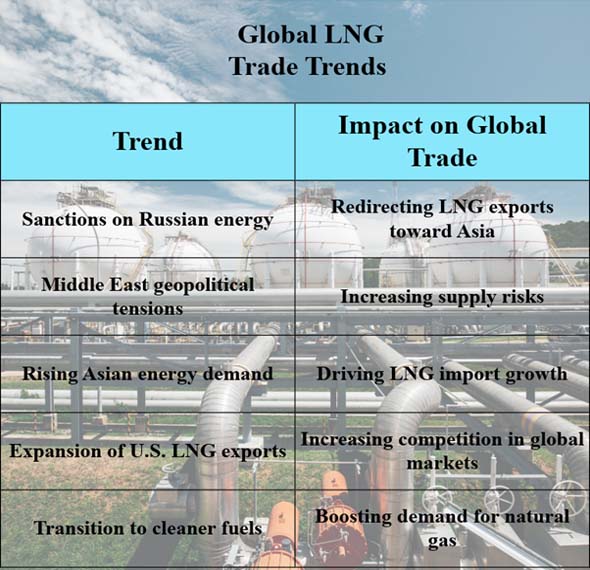
- Based on Russia Export Data by Import Globals, Russia supplies less gas to Europe after sanctions.
- Supplies are being affected by political issues in the Middle East.
- More demand from Asian economies that are rising quickly in terms of industry.
- Because of these things, LNG supplies are tighter and prices are more unstable in energy markets around the world. Importers are looking for additional sources of energy to make their imports more stable because of this.
Russia's Plan for Exporting LNG
Russia is one of the world's greatest producers of natural gas. In the last ten years, it has gotten much better at sending LNG to other countries. As per Russia Import Export Trade Data by Import Globals, the country has spent a lot of money on projects like Yamal LNG and Arctic LNG, which are supposed to service both the European and Asian markets. But Russia's export strategy has shifted completely because of changes in politics. Western sanctions made it tougher for Russian energy exports to get to technology, money, and key European markets after the Russia-Ukraine crisis. Because of this, Russia has started paying increasing attention to Asia. Offering LNG cargoes at a lower price is a big aspect of this objective. Russia can keep its export levels high and generate money even when its energy commerce is constrained by keeping shipping costs much lower than global market prices.
2. Losing the energy markets in Europe
- Before the war between Russia and Ukraine, Europe was one of the main buyers of Russian natural gas. European countries have been slowly trying to get less electricity from Russia, nevertheless.
- Policies that want to stop using Russian fossil fuels will probably cut down on LNG and pipeline gas imports from Russia by a lot in the next few years.
- Russia has had to divert its energy exports to Asian markets instead of Europe since demand there is decreasing down.
3. Too Many Projects That Have Been Approved Are Providing Too Much Supply
- As per Russia Import Trade Analysis by Import Globals, several Russian LNG plants, especially those under sanctions, have had a hard time finding buyers because of legal and financial issues. When there is more supply than demand, producers often decrease prices to get rid of shipments.
- Russia makes sure that these facilities keep making things by sending them LNG at lower prices.
4. Lack of LNG Supply Around the World
- It's just that Russia wants to cut costs at the same time that there isn't enough LNG throughout the world. Gas supplies have become tighter in some places because of problems with the main energy pipelines and infrastructure.
- In this case, discounted Russian LNG seems excellent to consumers that wish to discover cheaper alternatives to expensive spot cargoes.
Russia's LNG market is growing in Asia
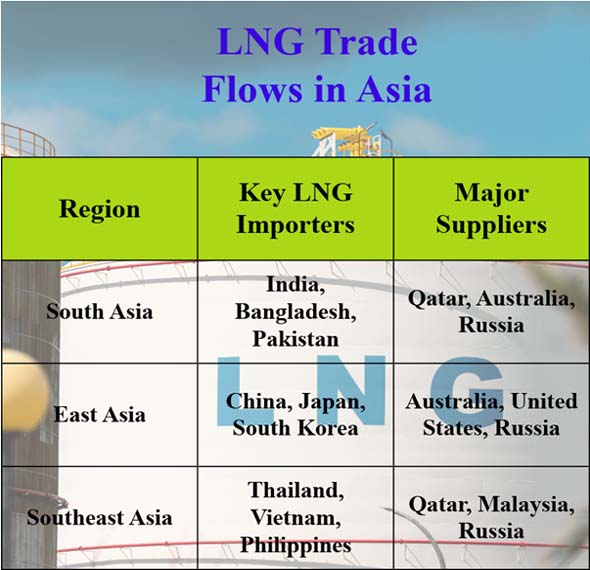
Most of Russia's LNG exports now go to Asian markets. Demand is rising swiftly in countries all over South and Southeast Asia because industry is increasing and people are using more energy. Based on Russia Exporter Data by Import Globals, Russia has been exporting a lot of cheap LNG shipments to Asian customers, including India.
- Bangladesh
- China
- Thailand
- Vietnam
These countries are quite vulnerable to energy prices because buying LNG from other countries directly affects the cost of electricity, industrial production, and the economy's stability. Russia hopes to create long-term energy partnerships with these economies by giving them cheap cargoes.
Why Russia Is Selling LNG for 40% Less
There are a few reasons why Russia is selling LNG for so little money.
1. Western Sanctions on Russian Oil and Gas
- The US and its European allies have slapped sanctions on Russia that make it exceedingly hard for Russia to sell energy to Western countries. As per Russia Import Custom Data by Import Globals, many Russian LNG projects and the companies that work on them are having problems with money and getting things done.
- Because of these efforts, it's tougher for Russia to export LNG through normal channels. As a result, the Kremlin has had to hunt for other markets. One way to encourage buyers to take on these geopolitical risks is to sell cargoes for less.
India's Growing Need for LNG Imports
The energy market in India is growing faster than virtually any other market in the world. Natural gas is becoming a more important part of India's plan to move to cleaner energy sources because it releases less carbon than coal and oil.
As per Russia Importer Data by Import Globals, the Indian government wants to add a lot more natural gas to the country's energy mix.
India's need for LNG comes from:
- Industry is growing quickly.
- Making more fertilizer
- More individuals demand power
- Building roads and bringing people to cities
- But India needs a lot of LNG from other countries since it can't keep up with the growing demand for its own gas.
Possible Advantages for India
If India could acquire Russian LNG at a discount, it would be good for the economy and the country.
- Less expensive to bring in energy.
- A lot of India's trade deficit comes from the money it spends on energy imports. Lower prices for LNG exports could help the government spend less on energy imports as a whole.
- Based on Russia Import Shipment Data by Import Globals, if Russia offers gas for prices that are substantially lower than the global spot market, Indian buyers could acquire gas at reduced prices.
- More secure energy
- India has always obtained its LNG from countries in the MiddlexEast, such Qatar. These suppliers are still very important partners, but to keep our energy safe, we need to engage with a lot of them.
- India would not have to rely on just one area as much if Russia becomes a major LNG supplier.
- Help for the growth of business
- For businesses like:
- Making fertilizer
- Chemicals made from oil
- Creating power
- Making steel
- Gas prices going down might help businesses compete and the economy grow.
India's Risks and Challenges
It could be excellent for company to buy cheap Russian LNG, but there are also some problems with it.
After the Sanctions
Many Russian LNG projects are affected by international sanctions. Doing business with these places could get buyers in trouble with the law or limit their money. Indian firms need to consider carefully about the legal effects before they sign contracts.
Problems with Shipping and Logistics
As per Russia Import Export Trade Analysis by Import Globals, it can be hard to get LNG from Russia's Arctic facilities to Asian markets because of long distances and special transportation needs.
There might be problems with trading because there aren't enough LNG ships and it's hard to get around in the Arctic.
Changes in Price
Prices for LNG cargoes can still shift around the world, even when they are on sale. If gas prices around the world drop a lot, it might not be worth it to purchase gas from Russia anymore.
The Future of Energy Cooperation between Russia and Asia
The strategy of Russia to sell LNG at a reduced price has the potential to initiate a more significant change in the global energy market. According to Import Globals' Russia export data, economies may become the main buyers of Russian energy if European markets stop buying gas.
This move could impact world trade in several ways:
- As per Russia Export Import Global Trade Data by Import Globals, Russia and Asia should collaborate more on energy.
- LNG exporters are competing more.
- New supply routes connect Arctic energy projects to Asian markets.
- Countries that produce energy are more powerful globally.
- India faces strategic challenges and opportunities due to these changes.
Conclusion
Russia's plan to discount LNG by up to 40% highlights how political uncertainty and sanctions have impacted global energy markets. According to Import Globals, Russia is able to increase its exports by selling an increased amount of electricity to Asian countries, as it is unable to sell as much to Europe.
It is inevitable that the global energy markets will undergo a transformation. The Russia-Asian LNG buyer connection could shape international energy trade in the next decade. Import Globals is a leading data provider of Russia Import Export Trade Data.
FAQs
Que. Why is Russia selling LNG for 40% less?
Ans. Because of Western sanctions and a reduction in demand from Europe, Russia is exporting LNG for less. As a result, Russia is looking for new customers in Asia.
Que. What countries are most likely to buy Russian LNG at a lower price?
Ans. India, Bangladesh, China, and countries in Southeast Asia are all viable buyers because they need a lot of energy.
Que. What will India gain from lower LNG prices?
Ans. If LNG costs drop, India might pay less for energy imports, create more goods in factories, and improve energy security.
Que. Is it dangerous to buy LNG from Russia?
Ans. Yes. Buyers should think about the risks of sanctions, how hard it is to move LNG, and the fact that gas prices could fluctuate swiftly in global markets.
Que. Where to get detailed Russia Import Export Global Data?
Ans. Visit www.importglobals.com.